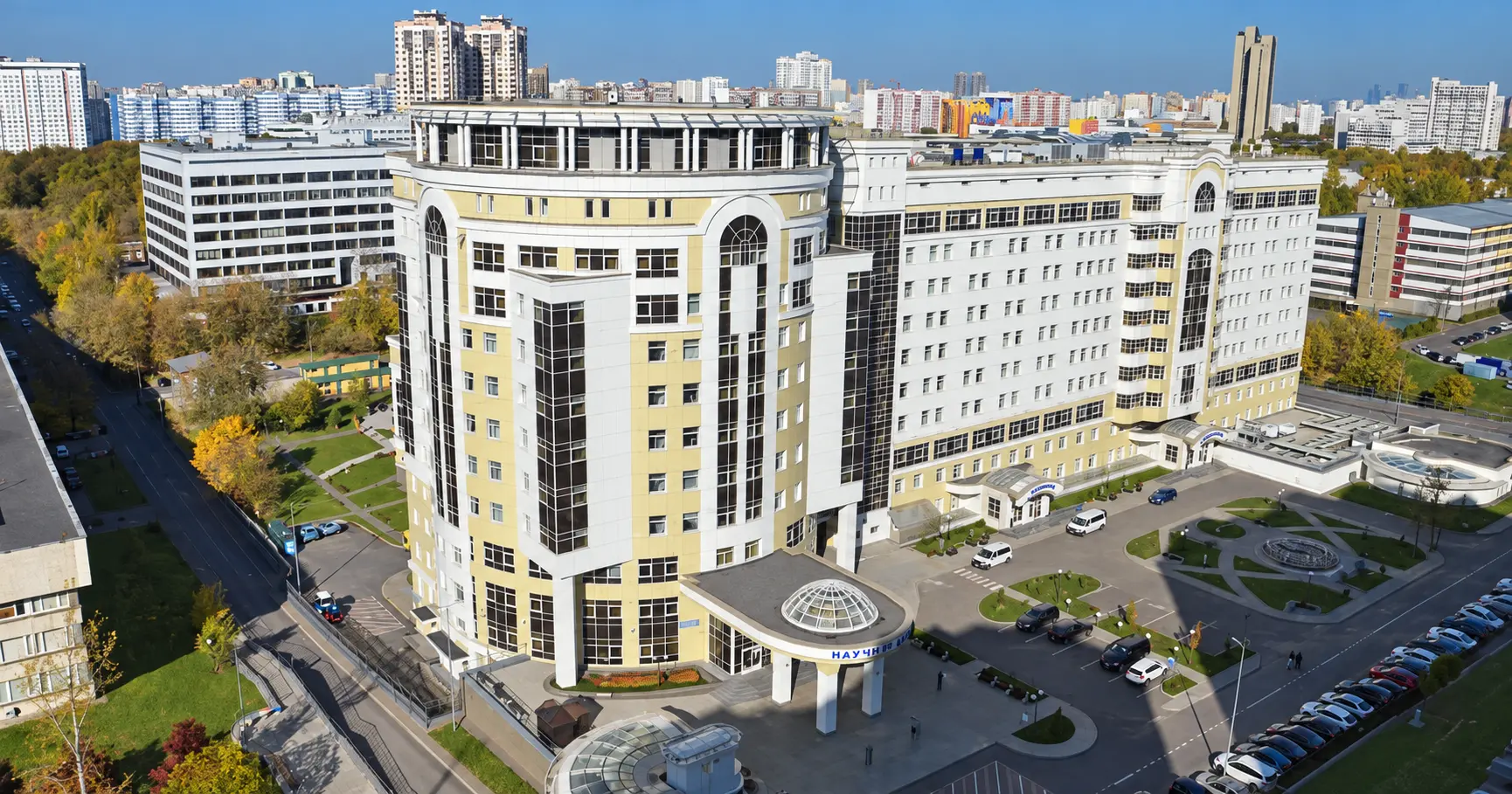
Federal Center for Brain and Neurotechnologies of FMBA Russia
Specialist care for brain conditions, from diagnostic clarification and medication selection to neurosurgery and rehabilitation
Sputnik Med can arrange a preliminary review of medical records, identify the expertise needed and obtain specific feedback before you travel to Moscow
Neurology, neurosurgery and rehabilitation in one center
Federal Center for Brain and Neurotechnologies · Moscow
01 / Introduction
About the clinic
The Federal Center for Brain and Neurotechnologies of Russia's Federal Medical and Biological Agency is a research and clinical center in Moscow specializing in central nervous system disorders, cerebrovascular disease and restoration of impaired functions
The center combines neurology and neurosurgery departments, diagnostic facilities and medical rehabilitation. This is important when the diagnosis must be confirmed and medication, surgery and subsequent rehabilitation options need to be compared
2019Year the Federal Brain Center opened
70 000+Patients treated in the first five years, by June 2024
1 500+Neurosurgical operations in the first five years, by June 2024
3 TMagnetic field strength of one of the center's MRI scanners
Main specialties include Parkinson's disease, epilepsy, multiple sclerosis, cognitive impairment and Alzheimer's disease, headache and the effects of stroke and traumatic brain injury. The center operates an outpatient clinic, a day hospital and inpatient wards
The center combines clinical care with research in neurotechnology, cerebrovascular disease and rehabilitation. Patients can consult a specialist team for complex diagnoses, inadequate treatment response or a second opinion
02 / Medical care
Main specialties
The center's departments address interconnected tasks: identifying the cause of symptoms, selecting treatment and determining rehabilitation options
01
Movement disorders
Parkinson's disease and tremor
Medication selection and adjustment, with assessment of motor and nonmotor symptoms. If medication is insufficient, specialists consider surgical methods, including deep brain stimulation (DBS) and MRI-guided focused ultrasound. The choice depends on the form of disease and investigation results
02
Assessment of seizures
Epilepsy and paroxysmal events
Clarification of the nature of seizures and individualized antiseizure medication. Prolonged video EEG monitoring and an epilepsy-protocol MRI are used together to assess the events and possible structural abnormalities
03
Neuroimmunology
Multiple sclerosis
Diagnosis and treatment of multiple sclerosis and other demyelinating and autoimmune nervous system disorders. A specialist neurologist reviews the disease course, investigation results and previous therapy to determine the next steps
04
Memory and independence in daily life
Cognitive impairment and Alzheimer's disease
Assessment of memory, attention and other cognitive functions, neuropsychological testing and differential diagnosis. An individual plan may include medication, cognitive training, speech therapy and management of risk factors
05
Cerebrovascular disease
Endovascular neurosurgery
Diagnosis and surgery for brain aneurysms, arteriovenous malformations and narrowing of cerebral vessels. Endovascular techniques are selected according to the lesion's anatomy and clinical indications, taking procedural risks into account
06
Rehabilitation after central nervous system damage
Rehabilitation after stroke and injury
Management of movement, speech, cognitive and daily living limitations after stroke and traumatic brain injury. Rehabilitation involves a multidisciplinary team and may continue from inpatient care to outpatient sessions
07
Common neurological symptoms
Headache and chronic pain
Assessment of migraine, other headaches and chronic pain syndromes. The doctor identifies the cause and chooses treatment; additional investigations and neurosurgical options are considered individually
08
The basis for informed decisions
Neuroimaging and functional diagnostics
MRI, CT, vascular studies, neurophysiological testing and laboratory investigations. PET/MRI and other nuclear medicine methods are available when indicated. Tests are selected for the clinical question: diagnostic clarification, procedure planning or assessment of treatment response
Not sure which specialist should review your records?
Sputnik Med's medical team will review your request, identify missing information and help determine the appropriate area of expertise
03 / Explore the facilities
The center in photos
6 photos
The main building, diagnostic rooms and rehabilitation facilities of the Federal Center for Brain and Neurotechnologies
Browse the photos
04 / The center's capabilities
From accurate diagnosis to treatment selection and rehabilitation
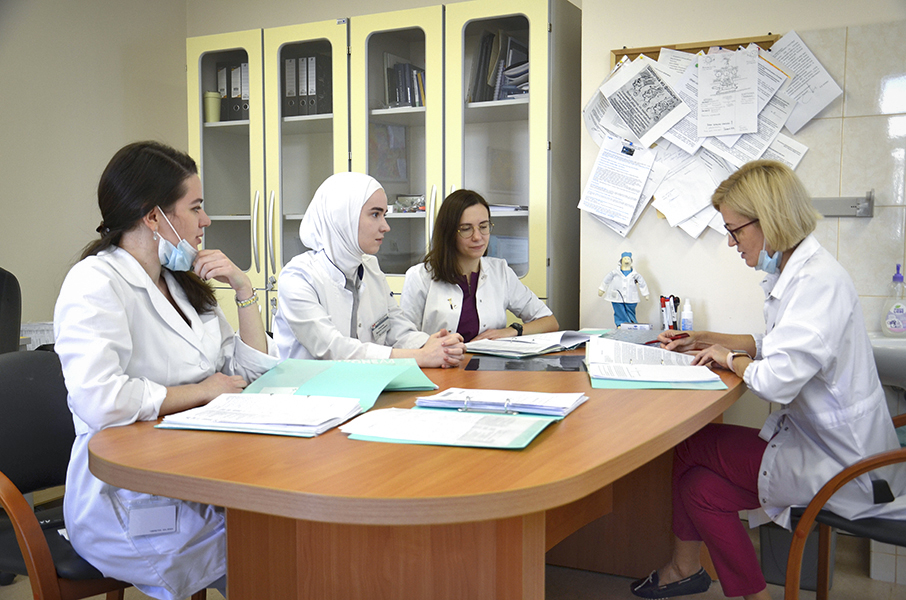
The center's specialist team at work
Comparing clinical findings
For complex neurological conditions, the history of symptoms, response to medication and investigation results are important. The center offers structural and functional imaging, MR and CT angiography and neurophysiology. These findings complement one another when indicated to guide further care
DBS for movement disorders
Deep brain stimulation is a functional neurosurgical method in which an implanted system delivers electrical impulses to selected brain structures. It may be considered for motor symptom control in Parkinson's disease when indicated. It requires careful patient selection and subsequent adjustment of stimulation settings
MRI-guided focused ultrasound
MRgFUS targets a selected brain area without incisions or opening the skull. The center uses it for essential tremor and Parkinsonian tremor. Assessment by a neurologist, neuropsychological testing, MRI and CT are required before treatment is considered; a multidisciplinary team makes the final decision
Rehabilitation with specific goals
Programs focus on impaired functions and everyday needs: movement, speech, memory and self-care. The center offers robotic movement therapy, neuropsychological and speech therapy methods and virtual reality technologies. Activities and intensity are selected according to the patient's condition
Research and clinical practice
The institution includes research units in neurotechnology, medical rehabilitation and cerebrovascular disease. Research activity does not mean every experimental method is available as standard treatment; participation in studies is discussed separately
Preliminary review before travel
You can begin by submitting medical summaries, a description of current limitations and previous treatment. Sputnik Med helps assemble records for specialist assessment and clarify the consultation format and practical arrangements. The center's specialists determine eligibility for admission, procedural indications and the treatment plan
05 / Your next step
How to access care at the clinic
You can start with a medical assessment before traveling to Moscow, receive specific feedback and plan your next steps on the basis of your medical records
1
Submit medical records
A patient services manager will clarify your request and explain which reports, images and investigation results to prepare. Sputnik Med’s medical team will conduct a preliminary review
2
Obtain a specialist assessment
We will arrange a review by the clinic’s specialists. If the records require a more detailed assessment, we will help arrange an online consultation. The format, cost and timing will be agreed in advance
3
Agree on treatment and travel arrangements
We will help clarify the investigation and treatment program, preliminary estimate and next steps. If travel is needed, we will coordinate dates, interpreting, accommodation and visa support where required
Medical decisions are made by the clinic’s doctor. Sputnik Med provides access to specialist expertise, helps arrange consultations and supports further treatment
Parkinson's disease, epilepsy, multiple sclerosis, cognitive impairment, cerebrovascular disease and chronic pain syndromes, as well as rehabilitation after stroke or traumatic brain injury. The appropriate specialty and care format are clarified from medical records
A preliminary assessment helps determine whether the method is worth considering. A final decision requires specialist investigations. For MRgFUS, the center requires a neurologist's consultation, neuropsychological assessment, MRI and CT, followed by review by a medical team
A recent medical summary, reports from a neurologist and other specialists, a list of medications with doses and effects, and details of surgery and coexisting conditions. If available, provide MRI and CT images in DICOM format and EEG and video EEG results. For rehabilitation, describe mobility, communication and ability to perform daily tasks
Yes, rehabilitation following central nervous system damage is a main specialty. Suitability and course format depend on the patient's condition, time since the illness and rehabilitation goals. These issues should be assessed before arranging travel
You can first send records through Sputnik Med for preliminary review and clarification of the next steps. A remote consultation can be considered if needed. An in-person examination may be required to confirm the diagnosis, select a procedure or arrange admission
Sputnik Med helps prepare records, arrange access to specialist expertise and coordinate consultations, admission and travel. Medical decisions, including diagnosis, procedural indications, choice of method and rehabilitation program, remain with the center's doctors
07 / Contact us
Start with your medical question
Describe your situation and attach your medical records if you have them. A Sputnik Med patient services manager will help arrange a preliminary review and, where needed, a consultation with an appropriate specialist
Federal Center for Brain and Neurotechnologies of Russia's Federal Medical and Biological Agency Moscow, 1 Ostrovityanova Street, Building 10 The building and appointment time will be confirmed when booking
Discuss treatment
Prepare a short message for a patient services manager