Multidisciplinary surgical center in Moscow Moscow
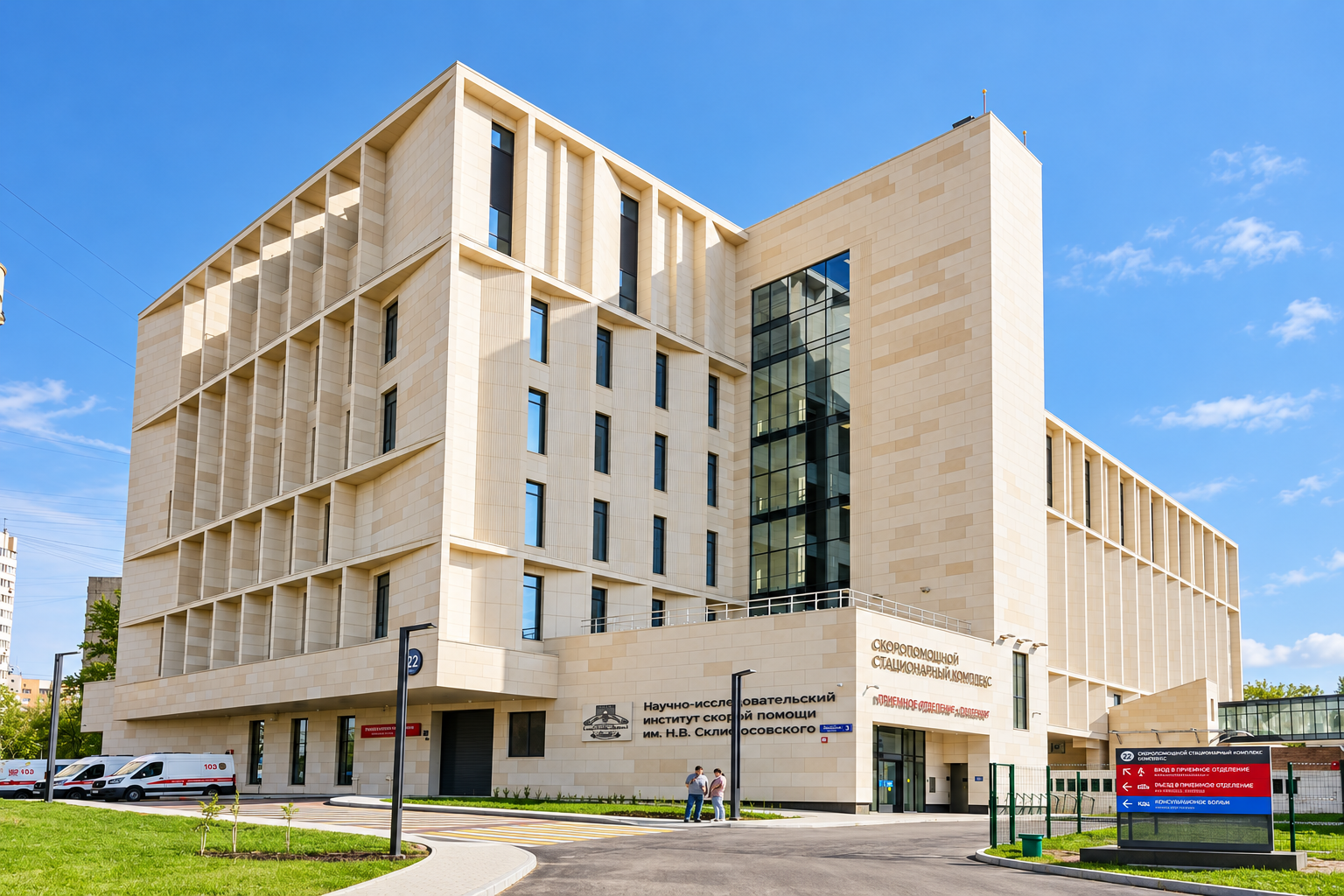
N. V. Sklifosovsky Research Institute for Emergency Medicine
Neurosurgery, heart and vascular surgery and treatment of complex injuries and their effects
The institute offers scheduled consultations, diagnostics and inpatient treatment for international patients. The relevant doctor determines treatment availability and the appropriate method after reviewing medical records
The N. V. Sklifosovsky Institute is a multidisciplinary Moscow institute where surgeons, neurosurgeons, cardiologists and intensive care specialists treat serious conditions and injuries. It provides emergency and scheduled care, outpatient investigations and surgery with subsequent inpatient treatment
83 000Patients per year
35 000Operations annually
30Operating rooms at the institute
>100Countries from which patients have sought care
A strength of the institute is its combination of surgical specialties, diagnostics and intensive care within one institution. This matters when disease affects several organs, complex surgery is needed or coexisting conditions complicate treatment
International patients are accepted through a medical tourism program. Specialties include neurosurgery, heart and vascular surgery, traumatology, general surgery, urology and gynecology. Investigations and treatment depend on diagnosis and condition
02 / Medical care
Main specialties
Scheduled treatment for international patients, from specialist consultation and diagnostics to surgery and early recovery
01
Brain and spinal cord
Neurosurgery
Brain and spinal cord tumors, pituitary adenomas, aneurysms, vascular malformations, spinal disease and injury-related conditions. The institute uses microsurgery, endoscopic access, neuronavigation and intraoperative neurophysiological monitoring. Methods consider lesion location and the patient's condition
02
Precision radiation
Gamma Knife radiosurgery
For selected brain tumors and vascular lesions, precise radiation without open surgery is available. The center has a Leksell Gamma Knife Icon and 3 T MRI for planning. A neurosurgeon determines suitability using images and clinical findings
03
Heart and aorta
Cardiology and cardiac surgery
Diagnosis and treatment of coronary artery disease, valve defects and aortic conditions. Surgeons perform coronary bypass, including beating-heart surgery, valve operations and aortic reconstruction. Cardiac function and coexisting conditions are assessed beforehand
04
Arteries and veins
Vascular and endovascular surgery
Treatment of arterial and venous conditions, including aneurysms, narrowing and impaired circulation. Open reconstruction and endovascular procedures are available. The choice depends on the vessel affected, investigation results and the patient's general condition
05
Musculoskeletal system
Traumatology and orthopedics
Care for musculoskeletal injuries, severe and multiple trauma and their effects. Plans may include surgery, specialist monitoring and early restoration of activity. Images, summaries and details of previous procedures are important for assessment
06
Digestive system
Abdominal organ surgery
Surgery for esophageal, stomach and bowel conditions, hernias and liver, biliary and pancreatic disease. Laparoscopic and intraluminal endoscopic methods are used when indicated. Particular specialties include complex liver and pancreatic resections and biliary reconstruction
07
Tissue reconstruction
Burn treatment and reconstructive surgery
Treatment of thermal injuries and their effects: scar deformities, contractures and soft tissue defects. The burn center uses skin grafting, microsurgery and wound dressings developed at the institute. Reconstruction aims to restore tissue and function
08
The first stage of recovery
Early medical rehabilitation
Rehabilitation after surgery, stroke, injuries and burns begins in hospital when the patient's condition permits. Programs may include therapeutic exercise, movement therapy, supported standing, physiotherapy and speech therapy. The institute provides the first, early stage; subsequent care is planned individually
Not sure which department should review your records?
Sputnik Med's medical team will review your needs, identify any missing information and help determine the appropriate area of expertise
03 / Explore the facilities
Sklifosovsky Institute in photos
10 photos
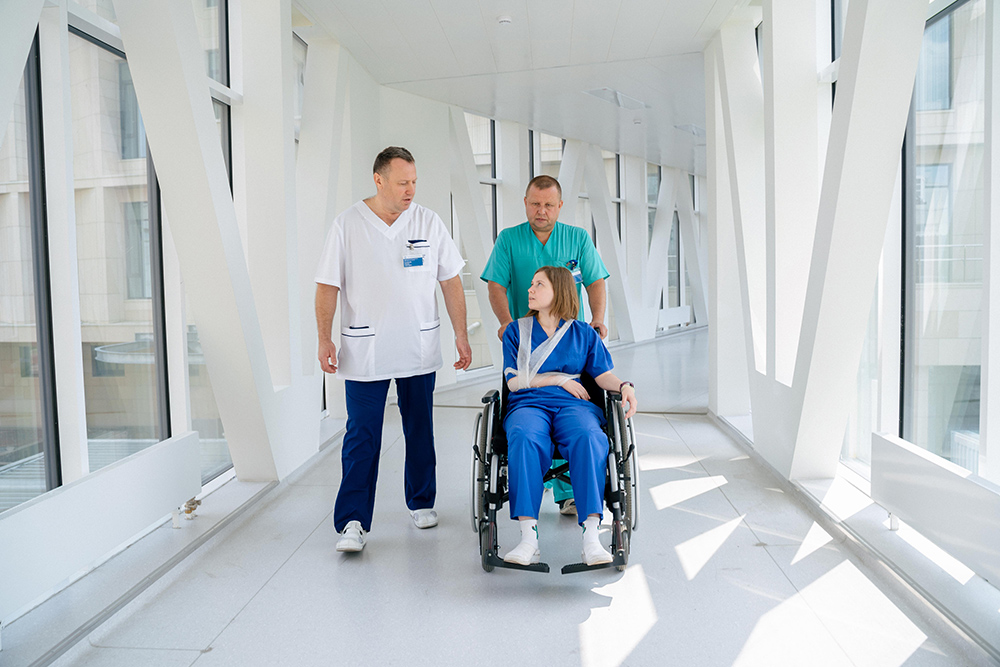
Institute buildings, diagnostic rooms, operating rooms and accommodation. Photos show actual Sklifosovsky Institute facilities and staff
Browse the photos
04 / The center's capabilities
Diagnostics, surgery and recovery in one institute
Patient support at the institute
Assessment tailored to the medical need
The institute provides CT, MRI, ultrasound, endoscopy, laboratory and functional testing. Radioisotope diagnostics, SPECT/CT and neurophysiological studies are available for selected questions. The doctor determines the investigations according to the diagnosis, previous tests and planned treatment
Technology for complex procedures
The institute has a flagship center with nine operating rooms, including two hybrid rooms. This combines surgery and imaging and allows several specialists to participate in one procedure. The flagship center is intended for emergency care; elective admission location depends on the specialty
Specialist intensive care
Specialized monitoring may be required after complex surgery. The institute has dedicated intensive care units, including neurosurgical, cardiac surgical and general surgical units. Vital-sign monitoring, respiratory support and renal replacement therapy are used when indicated
Recovery begins in hospital
A rehabilitation doctor works with the treating specialist and intensivist. As the patient's condition stabilizes, activity is selected and mobility gradually increased. Training uses exercise devices, biofeedback equipment and supported-standing systems. Goals are to restore movement and prepare for further rehabilitation
05 / Your next step
How to access care at the clinic
You can start with a medical assessment before traveling to Moscow, receive specific feedback and plan your next steps on the basis of your medical records
1
Submit medical records
A patient services manager will clarify your request and explain which reports, images and investigation results to prepare. Sputnik Med’s medical team will conduct a preliminary review
2
Obtain a specialist assessment
We will arrange a review by the clinic’s specialists. If the records require a more detailed assessment, we will help arrange an online consultation. The format, cost and timing will be agreed in advance
3
Agree on treatment and travel arrangements
We will help clarify the investigation and treatment program, preliminary estimate and next steps. If travel is needed, we will coordinate dates, interpreting, accommodation and visa support where required
Medical decisions are made by the clinic’s doctor. Sputnik Med provides access to specialist expertise, helps arrange consultations and supports further treatment
Yes. The institute provides emergency and elective care, including for international patients. Admission suitability and treatment extent are determined after reviewing medical records
Yes. First submit a medical summary, investigation results and a description of the clinical question. Sputnik Med helps prepare records for an appropriate specialist and clarify the next steps
A recent medical summary, specialist reports, test and investigation results and treatment details are needed. Original CT or MRI images and previous surgical reports are particularly important for neurosurgery, radiosurgery and surgery
No. Radiosurgery suitability depends on the diagnosis, lesion size and location, images and the patient's condition. A neurosurgeon decides after reviewing clinical findings
The Sklifosovsky Institute provides the first, early stage of inpatient rehabilitation. Activities begin according to the patient's condition after surgery, stroke, injury or burns. Further rehabilitation is planned individually
The clinic's doctor determines diagnosis, indications and treatment approach. Sputnik Med helps prepare records, coordinate consultations and admission and support travel arrangements
07 / Contact us
Start with your medical question
Describe your situation and attach your medical records if you have them. A Sputnik Med patient services manager will help arrange a preliminary review and, where needed, a consultation with an appropriate specialist
N. V. Sklifosovsky Research Institute Moscow, 3 Bolshaya Sukharevskaya Square. The specific building depends on the treatment specialty. The building and appointment time will be confirmed when booking
Discuss treatment
Prepare a short message for a patient services manager